1156. Benjamin Robert Haydon to EBB
As published in The Brownings’ Correspondence, 6, 333–334.
[London]
Sunday Night Feby 19. 1843
My Sweetest Friend,
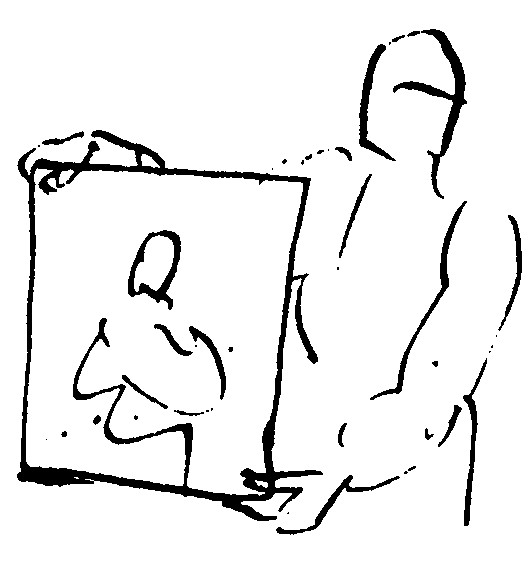
I send for your amusement pour se delasser, [1] two porte feuilles—one containing Subjects for Painting, the other containing Sketches, heads, of Lords, Ladies, Men & Women, Whigs, Radicals & Tories—which will amuse you[.] I will send for them Saturday only be careful in turning them over so they do not rub, and if you lift any up take them at opposite corners thus–
I am sure every trifle must be a relief, though your mind needs little but its own reflections to make it happy.
do not let them out of your own apartment, & let no one handle them–
After all these precautions you will hardly think them worth the trouble of being careful–
The Cartoon gets on well—& I hope to have it soon done[.] [2] Curtius has had its share of abuse, as you have seen– [3] It is not every one who can enter into its sentiment–
Are you on any work?– I feel deeply for Mary Mitford, but fear at such a crisis, no encrease of pension will be granted—nor do I anticipate great success in the scheme [4] so heavy is the pressure on Rich & poor.
Her Father ought not for the gratification of his own indulgences to have so left her[.] But it is no time to lament—one must exert oneself to help her–
If she cant make 100 a year do in the Country, I am sure she will not be able to make it do in London– I am totally against her removal she is so unused to the savage nature of a London Literary life–
God bless you My dearest Friend & recover you with the Spring[.] May I be able occasionally to lighten the burthen of your captivity–
B R Haydon
Miss B Barrett
Address: Miss B. Barrett / 50– Wimpole St
Publication: EBB-BRH, pp. 35–36.
Manuscript: University of Vermont.
1. “To divert you.”
2. i.e., “The Black Prince Entering London in Triumph.”
3. The Spectator said: “Haydon’s Curtius, (384,) is a bold design, vigorously executed, but utterly deficient in dignity and elevated sentiment.... Not a trace of the noble character and lofty purpose of the patriotic Roman is visible in this florid, chubby-cheeked physiognomy; the vainglorious expression of which dissipates any idea of its owner being animated by sublime self-devotion” (11 February 1843, p. 139).
4. i.e., the public subscription.
___________________