1393. EBB to Richard Hengist Horne
As published in The Brownings’ Correspondence, 7, 352–357.
[London]
Thursday. Oct. 5– 1843.
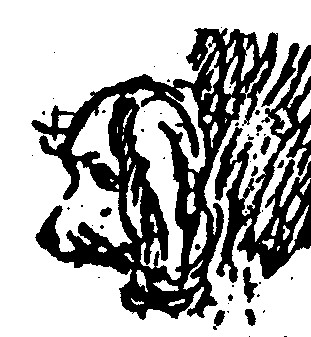
Here I send you one of the “Spirits of the Age,” strongly recommending it to a place on your frontispiece. It is Flush’s portrait, I need scarcely say; & only fails of being an excellent substitute for mine, through being more worthy than I can be counted.
Ah my dear Mr Horne; your application made me smile––a little with pleasure & pride that you should think of ‘illustrating’ your book with my darkness, & a little with selfmockery at the idea of it. No, no, no—my dear Mr Horne! To “recline” for any set of publishers in the world, even for yours, surpasseth the vanity which is in me. You know Mrs Orme told you that I was “modest,” & neither you nor I would believe a word of it; & here is the first proof that either of us ever had of it … unless (which is my opinion) it prove to be an instinct of selfpreservation instead. The last time I ‘reclined’ for my picture was for a miniature of Mrs Carter, just before I left Devonshire; & I did it for love’s sake [1] & Papa’s,—and yet although she was so obliging as to paint a very pretty little girl with unexceptionable regularity of features, he was ungrateful enough to throw it down with a pshaw & deny the likeness altogether. [2] There is no portrait of me at all which is considered like .. except one painted in my infancy, where I appear in the character of a fugitive angel, [3] which Papa swears by all his Gods is very like me to this day; & which perhaps may be like … about the wings. In conclusion you see, I both cant & wont send you a picture for such a purpose … it is a superfluity of negation. ‘Wont’ would have done very well for a woman, .. now would it not?
Beseech your grace [4] ––do not be angry with me. It seems to me an ultraimpossibility to send my portrait to a publisher for introduction to the public—and not even to please
‘The great Orion stooping from the west,’ [5]
could I bring my mind to such a thing. It may be affectation—— Who knows? And yet really I think it is too impulsive, instinctive & single-thoughted to be affectation; even under that thickest of disguises which is assumed by our own motives before our own eyes.
Since I am beginning to be philosophical we might as well pass suddenly to the ‘Biographical Sketch’. [6] So you think that I am in the habit of keeping biographical sketches in my table drawer for the use of hypothetical editors? Alas!——
Once indeed, for one year, I kept a diary in detail & largely; [7] &, at the end of the twelve months, was in such a crisis of selfdisgust, that there was nothing for me but to leave off the diary. Did you ever try the effect of a diary upon your own mind? It is curious—especially where elastic spirits & fancies are at work upon a fixity of character & situation–
You see how it is– I have no Biographical Sketch; & perhaps if I had …! My dear Mr Horne, the public do not care for me enough to care at all for my biography. If you say anything of me (and I am not affected enough to pretend to wish you to be absolutely silent if you see any occasion to speak) it must be as a writer of rhymes & not as the heroine of a biography– You must not allow your kindness for me to place me in a prominency which I have to deserve, & do not yet deserve. And then as to stories, my story amounts to the knifegrinder’s, [8] with nothing at all for a catastrophe. A bird in a cage would have as good a story– Most of my events & nearly all my intense pleasures have past in my thoughts. I wrote verses; as I dare say many have done who never wrote any poems—very early—at eight years old or earlier—but what is less common, the early fancy turned into a will & remained with me—& from that day to this, poetry has been a distinct object with me—an object to read think & live for—& I could make you laugh, although you cd not make the public laugh, by the narrative of nascent odes epics & didactics crying aloud on obsolete Muses from childish lips. The Greeks were my demi-gods, & haunted me out of Pope’s Homer until I dreamt oftener of Agamemnon than of Moses the black poney. [9] And thus my “great epic” of eleven & twelve years old, in four books & called the “Battle of Marathon”, & of which fifty copies were printed because Papa was bent upon spoiling me, [10] .. is a Pope’s Homer done over again .. or rather undone; for although a curious production for a child, it gives evidence only of an imitative faculty & an ear, & a good deal of reading in a peculiar direction. The love of Pope’s Homer threw me into Pope on one side, & into Greek on the other & into Latin as a help to Greek—and the influence of all these tendencies is manifest so long afterwards as in my ‘essay on mind,’ [11] —a didactic poem written when I was seventeen or eighteen, & long repented of as worthy of all repentence. The poem is imitative in its form—yet is not without traces of an individual thinking & feeling—the bird pecks through the shell in it. With this it has a pertness & pedantry which did not even then belong to the character of the author; & which I regret now, more than I do the literary defectiveness.
All this time, & indeed the greater part of my life, we lived at Hope End a few miles from Malvern, in a retirement scarcely broken to me except by books & my own thoughts: and it is a beautiful country & was a retirement happy in many ways, although the very peace of it troubles the heart as it looks back. There I had my fits of Pope—& Byron—& Coleridge—and read Greek as hard under the trees as some of your Oxonians in the Bodleian—gathered visions from Plato & the dramatists—eat & drank Greek & made my head ache with it. Do you know the Malvern Hills? the hills of Piers Plowman’s visions? They seem to me my native hills; for, although I was born in the county of Durham, I was an infant when I went first into their neighbourhood & lived there until I had past twenty by several years. Beautiful beautiful hills they are! And yet not for the whole world’s beauty wd I stand in the sunshine or the shadow of them any more [12] —it wd be a mockery—like the taking back of a broken flower to its stalk. From thence we went to Sidmouth for two years; & I published there my translation from Æschylus, [13] which was written in twelve days, & shd have been thrown into the fire afterwards—the only means of giving it a little warmth. The next removal was to London & brought us close to you .. did it not? .. to 74 Gloucester Place when you were at 75 .. was it not? I was unaware of it however until Papa had purchased this house & we were dwellers here. And then came the failure in my health which never had been strong (at fifteen I nearly died) & the publication of the ‘Seraphim’ the only work I care to acknowledge; [14] & then the enforced exile to Torquay, .. with prophecy in the fear & grief & reluctance of it—a dreadful dream of an exile, which gave a nightmare to my life for ever, & robbed it of more than I can speak of here—do not speak of that anywhere. [15]
Do not speak of that, dear Mr Horne. And for the rest, you see that there is nothing to say. It is a “blank, my lord”. [16] Yet I could write an auto-biography——but not now, & not for an indifferent public––of whom by the way, I never did & do not complain, seeing that they received my [‘]Seraphim’ with some kindness, & that everything published previously by me I reject myself, & cast upon the ground as unworthy. The ‘Seraphim’ has faults enough––& weaknesses besides—but my voice is in it, in its individual tones & not inarticulately.
Writing writing writing I am,—yet writing nothing which you ask for. Here at least, are the dates of the three books–
Essay on Mind—1826.
& other poems.
Prometheus—1835 [17]
& other poems
The Seraphim & other poems. 1838.
My wish, my private wish, is that you shd say nothing of the two first books [18] ... or sweep them cursorily with the most extreme feather of your wing– The first book especially, consisting of poems from the age of thirteen (of which, are several of the smaller ones) & didactic pedantry of almost as absolute an immaturity, .. certainly has a claim to escape from public criticism. Its circulation has been very limited of its own accord—& my will has contracted it further—for I wd as soon circulate a caricature or lampoon on myself as that essay. And for the Prometheus, all the remaining copies are safely locked up in the wardrobe of Papa’s bedroom,—entombed safely as Œdipus among the olives. [19] A few of the fugitive poems connected with that translation may be worth a little perhaps—but they have not so much goodness as to overcome the badness of the blasphemy of Æschylus.
Yes, I have recovered my pet [20] —no, I have “idealized” none of the dog-stealing! I had no time. I was crying while he was away; & I was accused so loudly of “silliness” & “childishness” afterwards, that I was glad to dry my eyes, & forget my misfortunes by way of rescuing my reputation. After all it was excusable that I cried. Flushie is my friend—my companion—& loves me better than he loves the sunshine without. Oh, and if you had seen him, when he came home & threw himself into my arms .. palpitating with joy .. in that dumb inarticulate ecstasy which is so affecting .. love without speech! “You had better give your dog something to eat” said the thief to my brother when he yielded up his prize for a bribe .. “for he has tasted nothing since he has been with us.” And he had been with them for three days!– And yet his heart was so full when he came home that he could not eat, but shrank away from the plate & laid down his little head on my shoulder. The spirit of love conquered the animal appetite even in that dog! He is worth loving—is he not?
I shall keep this letter in the hope of seeing Mr Kenyon & asking about Macauley. You are very right in admiring Macauley—who has a noble clear metallic note in his soul, & makes us ready by it for battle. I very much admire Mr Macauley—& could scarcely read his ballads & keep lying down. They seemed to draw me up to my feet as the mesmeric powers are said to do– I do not however think that Mr Kenyon knows him as intimately as you fancy—although to be sure, Mr Kenyon knows everybody, more or less.
And now I put an end to this letter (though you wd scarcely suppose it)—& wish you all success prosperity & laurels in your new field. I thought you had vanished from every field, & that I was not likely to find you higher up than Hades. [21] But being found, may you be successful. You walk in honorable steps, following Hazlitt; [22] & the work is likely to be popular.
Are you aware that Mr Chorley published a work called ‘The authors & authoresses of England’ some time ago, with profiles & short notices? [23] When I say ‘some time ago’ I mean some years. And your book will probably assume a higher character, & go deeper.
Ever truly yours
EBB–
Mr Kenyon I have seen—& ascertained that he does not know Mr Macauley in any degree, less or more.
Address: R H Horne Esqr / 38 Finsbury Square.
Publication: EBB-RHH, I, 154–168.
Manuscript: Pierpont Morgan Library.
1. Philemon, 1:9.
2. This miniature is reproduced as the frontispiece to vol. 5. See letter 819 for EBB’s report on her family’s comments on it.
3. Reproduced as the frontispiece to vol. 1.
4. King Richard III, I, 1, 103.
5. Tennyson, “Locksley Hall” (1842), line 9, slightly misquoted.
6. Requested by Horne in the previous letter.
7. See Diary in the list of cue titles, p. ix.
8. Perhaps a reference to “The Friend of Humanity and the Knife-Grinder” (1797) by George Canning (1770–1827).
9. Moses, owned by the Barretts at Hope End, was mentioned in an essay by EBB in vol. 1, appendix III, pp. 360–362.
10. Although EBB commenced The Battle of Marathon in 1817, when she was eleven (see vol. 1, p. 351), it was privately printed in 1820, shortly before her 14th birthday. See Reconstruction, B1–B15 for the known extant copies.
11. An Essay on Mind, With Other Poems was published in 1826.
12. i.e., because of the memory of her mother’s death.
13. Prometheus Bound (1833).
14. The Seraphim, and Other Poems (1838).
15. A reference to Bro’s death in Babbacombe Bay on 11 July 1840.
16. Twelfth Night, II, 4, 110.
17. EBB is mistaken; as indicated above, Prometheus Bound was published in 1833.
18. Horne referred only to “spirited translations from Æschylus” (A New Spirit of the Age, II, 133).
19. The oracle had foretold that Œdipus would die and be buried in a sacred grove, and that his bones would bring prosperity to the country in which they lay.
21. EBB is making a play on the relative positions of the Elysian Fields and Hades.
22. Hazlitt’s The Spirit of the Age; or Contemporary Portraits was published in 1825.
23. The Authors of England was published in 1838 (see letter 611).
___________________