2819. EBB to Arabella & Henrietta Moulton-Barrett
As published in The Brownings’ Correspondence, 16, 20–26.
Florence
19 October [1849] [1]
My beloved Henrietta & Arabel! How kind of you, how good of you—how I thank you both for those beautiful presents– Such fabulous sashes, such mittens (always of use!) and oh, my own dearest Arabel, such a perfect frock! Directly we arrived in Florence I sent Wilson, the balia & baby to the Cottrells to ask about my parcels, & they came back laden, & I was the more glad that I had been uneasy about the safety of the precious things before I had them. Arabel, your frock is exquisite– Baby was charmed with the shoulder knots especially, & screamed to have it in his own hands– We told him to kiss it because it came from you, and instantly he opened his mouth wide & kissed it in his way– Never was a prettier frock seen! How I thank you! How I look at all the stitches & trace your fingers in them, dear, dear Arabel! But, Arabel, you magnified your office a little! you took yourself to be working for some small Titan, I think. We tried on the frock directly, & its waist came somewhere across the abdomen of the living subject. He is such a little creature, you forgot to consider—very fat, but with slight bones,—& then only seven months old! If we water him well & he grows prodigiously, the frock will do for next summer perhaps; & then, if we get to England, he will appear in glory– Wilson is always lamenting that we have not “worked robes” for him, & this meets her ideal—it is “perfectly elegant” she says– And I am glad it’s too large, because so it will last longer, & be available in the summer when people need’nt wear coats & hide their sashes– It will be a frock to last for years– As to the sashes, which are most beautiful, both of them, he shant spoil them this winter– They shall be kept for the summer sun, when he can toddle about a little & show his gorgeous train like a peacock– I really could’nt consent to the balia’s tumbling them as she carries him about in her sturdy arms– Meanwhile the use of the frock (besides reminding me of Arabel’s kindness) shall be to afford us a pattern in the shape of the body & robes for a winter frock for him—we want patterns dreadfully, and the frocks which Madme Biondi gets from Paris sometimes, may suit her princesses & duchesses, but are too expensive for me– And then I dont like taking a pattern of what I dont buy—you understand! Thus your frock is a treasure in a double sense– The lace is just what I wanted—very pretty! thank you, dearest Arabel!– And thank you dearest Henrietta! How kind you both are!
A letter has just come from Mr Kenyon which makes me quite unhappy. I do beseech you to tell me the truth. Is Papa looking unwell? is he altered since I saw him? Is he unwell now? Mr Kenyon speaking in an incidental manner of his meeting with Papa, observed that he walked feebly & looked ill– The words went down to the roots of my heart & turned them cold. If you love me, I beseech you, one of you, to write to me without losing time, to tell me exactly how he is, how he looks—the truth, the whole truth. I cannot bear any disguises—the idea is dreadful: I shall count the days till your letter comes– Robert assures me that I am alarming myself unnecessarily, & that Mr Kenyon probably was under quite a wrong impression through Papa’s having felt embarrassed perhaps for a moment on meeting him suddenly after their correspondence—and this may be so—but still it may not be so, and that is enough to make me unhappy. Has he changed any of his habits? lost any of his energy? Tell me the whole truth– Should I [2] think him altered? I do love him so entirely, that having to write these questions is a pain of itself– Your manner of naming him does not seem to imply any evil—but what if you have been deceiving me for love’s sake, against truth’s sake? Write truly now– I wrote to him from the Baths of Lucca a letter which he will have received the day before your return– It was humble & tender, & I begged him in it if he would not forgive me, at least to forgive my writing to him from time to time—not too often, so as to teaze him. I asked him too to remember that my child a little belonged to him & had not offended him, so as to name it in his prayers even if I myself were excluded– I cannot think that he wd send back that letter—but he will not answer anything, I know. Robert would write—only I am afraid to let him do it. If a savage word were replied, I mean, a stern word spoken in anger, .. the gulf between us would be wider– God knows that I am ready to humble myself in the dust before Papa—but how, how? Only tell me that he is not ill, nor changed, nor weak—God grant that you may be able truthfully to tell me that.
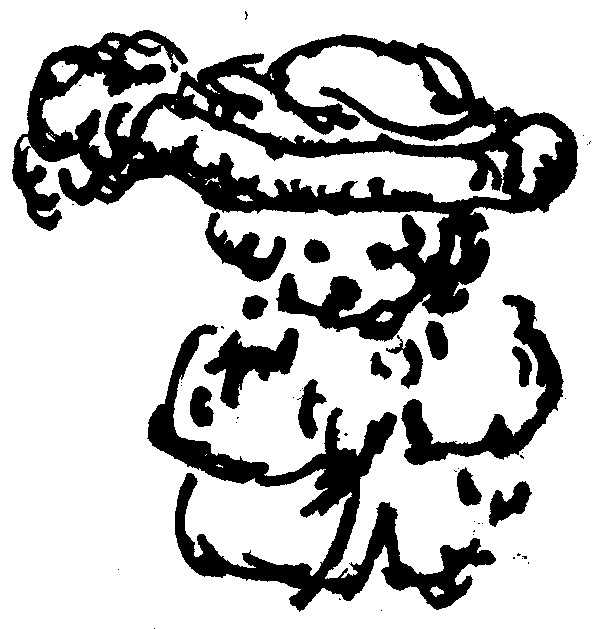
Now let me take breath & change the subject,—for certainly I have not been writing what has amused you– We arrived in Florence on Wednesday, after a very fatiguing journey, having missed the railroad at Lucca (through Alessandro’s miscalculation) & been forced to post it to Pisa .. six hours on the roughest road I have travelled in Italy: & then came the rail-carriage to Florence. [3] If as Robert said, “we had’nt had such a saint of a child” it would have been worse, and indeed the saintship was confined to him, for we were all vexed & tired. As to Baby, he never even made a cross face once, much less cried, & was in a permanent state of rapture at everything he saw– He siezed upon the golden buttons of a railroad official, with both his hands, in a transport of incipient hero-worship, springing from the balia’s arms—& the grave dignitary could’nt help smiling & patting the fat rosy cheeks– Baby has’nt the least notion of being shy—he’s afraid of nobody in the world—and he & Flush agree in their marked preference of populous streets with carriages, & men, to forests & mountains. Wilson says that his delight in being taken out to walk in Florence is something curious—he turns his head from one side to another, screaming for joy at the horses, & the soldiers– I am afraid that he even admires the Austrian uniform– We have bought him a white beaver (or rather felt) hat, .. soft & light, .. & with a long drooping white feather .. tied with rosettes of rose-coloured ribbon—where the brim is turned up—but you cant see how lovely the child looks in it– Illus. Wilson says that all the people turn round to admire him– Little angel, he is. So good & sweet & engaging! such winning little ways! No, I dont think I exaggerate. Remember what I said about his eyes!– Robert is always reproaching me for having been unjust & unkind about his eyes,—and really they are pretty eyes, with long dark eyelashes that touch the eyebrows when the eyes are wide open—& I oughtnt to have called them small .. it was not kind of me. They are much improved lately, & shine like blue fire– When he was asleep in the rail-carriage, he reminded me of Ibbit Jane in her young childhood, though I did not know Ibbit when she was as young as he—but it is curious, that he has quite a fair complexion, with light brown hair, of a golden lustre, & marked eyebrows quite golden. Minny was’nt wrong, you see, when she predicted light hair for him– Not that Robert will agree that it is light—oh, but it is—it’s a matter of fact! though it may grow dark of course, & will, very probably. Wilson declares that he is like my family, & particularly like you Henrietta—& once when I met him out of doors, he struck me as like Arabel—there is a look of my family in him most undeniably—only the mouth & chin are fac similes of Robert’s—so I dont know how you will make it out. We are very glad to get back to our chairs & tables, .. & I am ignoble enough to be not sorry that I can walk out without having to go up or down a ladder .. or the equivalent of a ladder—and yet the dear mountains & silences, how I miss them. Tell Arabel that the first thing I did on receiving her letter & instructions, was to send to the English chemist’s [4] for the solution of camphor,—but I have’nt had occasion to use it yet. What I took at Lucca was plain camphorated water—we made it ourselves, & I took a wine-glassful at a time– During the whole four months the tendency was permanent, but was attended with no pain whatever—& notwithstanding all, Madme Biondi exclaimed at my looking so much better & fatter! So you see there has been nothing very wrong. It was a common complaint at the ‘Bagni’, .. & indeed four persons died of dysentery—also it has been prevalent, they say, at Florence—but no instance of cholera has occurred. Moreover the general health has much improved since the cooler weather has set in. Mr Righi has had an attack at Prato, & didnt write to Wilson for a long time– We were sure something must be the matter—and the ‘balia’, who had observed to me one morning that ‘we had better talk about the silence cheerfully, not to make poor “Lisa” too anxious,’ judiciously broke out at noon-day, in her presence, with a “No, non posso credere che sia morto”!! [5] I really could’nt help smiling at this singular proof of consideration for (Lisa’s) Wilson’s anxiety, while I said, “Morto! come morto!—ma non si pensa di queste cose”. [6] The ‘balia’ is the completest baby grown up I ever saw or heard of. When the explanation of the silence came, he had been ill with the prevailing malady. Still, it does seem to me that Mr Righi has’nt written quite as often as he might have done, & Wilson has expected him every day since we arrived, and he does not appear– I have a high opinion of Mr Righi—of his attachment for Wilson—but if he isnt here tomorrow (I think he will) & if he is in good health, I shall not know what to conclude. She fancies that he has suffered some vexation about the Grand Duke—but mind you say nothing about this—dont let her family hear a word of it, mind– Because I tell you in confidence– He, like all these Florentines, made no proof of heroism in fidelity toward the sovereign; and, though averse at heart to Guerazzi’s revolution, was submissive to it in fact– The Grand Ducal guard has been dissolved .. & it is surmised that his retiring pay has been suspended, with that of others– At the same time, there’s the shop at Prato, which is said to be doing well– We shall see– I think he will come tomorrow & explain everything—but I do hope to take back Wilson to England as Wilson, if we go to England next summer– Oh, I hope we shall– I try to keep Robert up to it, I assure you. Who knows but that there might be a chance for me with Papa? who knows? I yearn to him so—oh, I yearn to him so, Henrietta! and especially since those words of Mr Kenyon’s .. who did’nt fancy he could pain me so, (dear Mr Kenyon) when he wrote them. There is only one obstacle to our going to England– I am afraid, Henrietta, it will be quite impossible for me to leave Florence in May .. consequently in June! [7] Consequently how late it will be for the journey! But we shall see– Dont talk about the obstacle, if you please, because one can be sure of nothing, so far—and I should’nt have said even that uncertain word, if it had not been that Mr Kenyon’s set me on feeling earnestly– Also, I thought of that beloved Arabel’s “counting the months”. Oh, I dont “give it up” mind– Dont fancy so– There may be such a thing as a somewhat shorter visit– We may arrange something– We shall see .. as I have said ever so often in the course of this letter. Robert always says it’s my favorite form of speech,—because I would’nt believe that the French would restore the old forms of priestly despotism at Rome, & curse them accordingly, .. without waiting “to see”– I wish Arabel would enquire how Mrs Jago goes on & let me know. I am afraid she is suffering more than usual, since I have not for months heard from her, .. & dont wish to hear, so as to fatigue her– Is she nervous about her situation? I think much of her, let Arabel say. Two letters I have written .. or three, I think—yes, three. Mind you dont forget to send my love & warm congratulations to Arabella & Mr Bevan– [8] What of Arlette? Why do you dislike Henry Trant’s [9] being so much in Wimpole Street? I like him for ‘auld lang syne’ & send him my love. Bummy wont settle all alone at Tunbridge Wells, I think– When it comes to the point I know she wont, & I dont think I would if I were she. Do the Hedleys stay on at Tours?—or what?—& did uncle Hedley get my letter after all? You will be horrified at the word I have dropt about May. I suspected it when I wrote last which made me speak hesitatingly of England—dear England—something always happens. Yet better now than in the winter—there may be a chance, & I cling to the hope, fast & with both hands. Except for England, I should not be sorry. But one cant be certain– Remember to keep sacred this secret, both of you, as it is so unpleasant to have things talked of prematurely——
With regard to dearest Trippy’s business, that she shd not yet have received Mrs Gordon’s “offer”, is a proof of Robert’s being right in his suspicion that Count Cottrell was feeling the ground in what he said of the £50– He told Robert that Mrs Gordon had written the letter “a few days ago” and I wrote to you on hearing of it—the letter might have been written, but could’nt have been sent– There, was a quibble– Ignoble business, altogether! If they conclude finally <in> behaving ill to Trippy, I certainly dont mean to treat them as friends– Quarrelling is a detestable thing—but one cant compromise one’s clean hands & dear friends– Meanwhile, however, it is better to maintain the usual forms, because we have more hold, so, on the negociators– Robert & I were wishing the other day to have Trippy with us here to strike shame into them– I was quite in earnest in what I said of her coming to Florence to live with us. If she wd come we would sieze on her with open arms. Robert observed that it would be our duty to have her, even if it were not our pleasure, which it certainly is– Give her ten kisses from me, dear thing– I did not propose a very monstrous proposition, Henrietta, after all– To get somebody to present a letter, implies a certain introduction—and then I have a faith in a direct line of manly conduct in these things– Lord Palmerston not only answered a letter of Robert’s, but sent a special messenger with the letter to New Cross [10] —and perhaps he did not do this through any great enthusiasm for poetry. Have you seen Susan Cook since your return? Give my love to her & Surtees. You will be glad to be in London again. I love you & sympathize with you, my own Henrietta, with my heart & soul. May God bless & prosper you. Do one of you write instantly & truly about Papa– I never had the heart to tell you before—I lost my glass on the journey from the Prato Fiorito, & all our enquiries were vain, for a month. The evening before we left the Baths of Lucca, a peasant brought it back– May I find Papa’s love again, as I have his gift! God bless you all– Grateful thanks from
your attached
Ba–
Robert’s best love always. I found your three times welcome letters in Florence– Thanks on thanks to you both.
How is Crow? how does she get on in business, & where are the rest of her “six children”? [11] —— Tell me if Mrs Orme is better & where she is. I meant to keep writing at this letter for two or three days but finish it at once that I may hear of Papa– Love to Minny!
Address, on integral page: Care of Miss Tripsack / (Miss Barrett) / 12. Beaumont Street / Devonshire Place / New Road / London.
Publication: EBB-AB, I, 282–287.
Manuscript: British Library.
1. Year provided by EBB’s reference to Pen’s age: “only seven months old!”
2. Underscored twice.
3. The preferred journey from Lucca to Florence at this time was made via Pisa and Empoli, because the distance, about 62 miles, could be covered by rail. The railway from Lucca to Florence, via Pescia and Pistoia, a more direct route, was then under construction.
4. Henry Roberts, “an English chemist and druggist,” who kept “the Farmacia del Sole, opposite the Strozzi Palace” (Murray’s Hand-Book for Travellers in Northern Italy, 1847, p. 476).
5. “No, I can’t believe that he is dead.”
6. “Dead! What do you mean dead!—one shouldn’t think of such things.”
7. EBB believed that she was pregnant.
8. On the birth of their second child, Arabella, at Calverley Park, 21 September 1849.
9. Henry Trant (b. 1804) was EBB’s cousin; her great-grandfather, Edward Barrett, and Henry Trant’s grandfather, Wisdom Barrett, were brothers.
10. We have been unable to trace this exchange between RB and Palmerston.
11. EBB knew of Crow’s hopes for a large family, but she had only two children: Mary Elizabeth (“Lizzie”) and Ellen.
___________________