4517. EBB to Henrietta Cook
As published in The Brownings’ Correspondence, 27, 31–34.
Casa Guidi.
Saturday– [5–7 November 1859] [1]
My ever dearest Henrietta, though I have just written to Arabel, I cant put off any more sending you the letter which is to express my true sympathy in dear Surtees’s & your own & the childrens’ great loss & grief. I heard of it with a deep regret & full sense of how you must all have received <the> [2] sudden a blow, of the removal of a person so much beloved & venerated by you. [3] Such griefs do however bring their own counteraction– The more you have lost the more he has gained. I did not know him, nor did I agree in certain of his views as you are aware,—but this does not hinder my appreciation of a devout & holy life, & my assurance that having entered here into the service of His Lord, he has entered there into His joy. [4] Our love, Robert’s & mine, to your dear Surtees. Let him accept the loving sympathy of both of us.
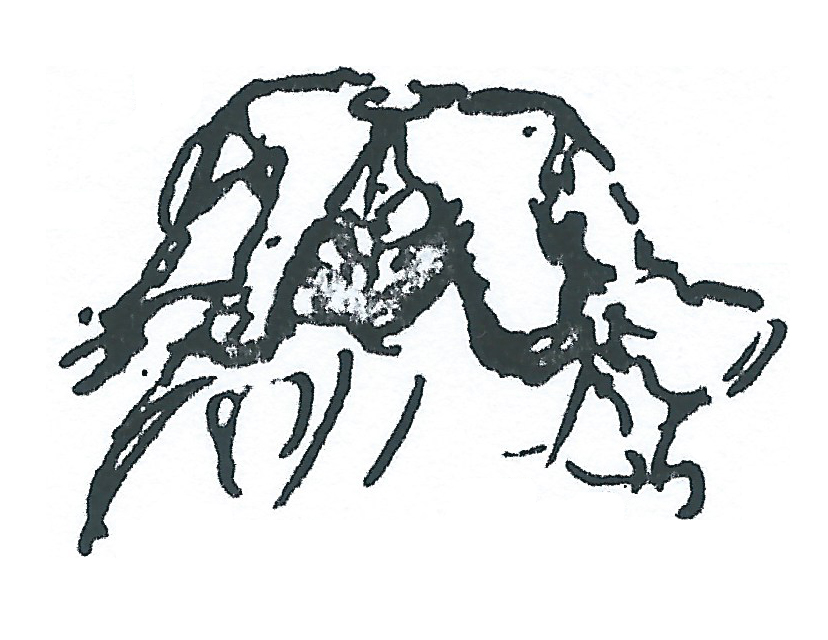
Now, you will write to me soon, dearest Henrietta, & tell me all about you all. I have been full of thoughts & pity for you on another ground—that is, your parting from Altham for his school-days. [5] You are probably quite wise about it .. & by this time, I trust, the natural pain, both his & yours, is merged in the satisfaction of a strong sense of advantage. Unless you had a tutor at home for your boys it would be imperative on you to send them to school of course—& perhaps the sooner you break certain home-habits the better in the long run—though it did seem to me that you were rather in haste to begin the classical part of Altham’s education. Pen has not learnt a word of Latin yet, observe. But he will run where others walk, on account of his knowledge of Italian, so that we dont lament it much. We mean to have a master for him presently, our time being valuable beyond money– It wont do to give up our art for teaching: it is not good even for Peni: and I, for one, have not strength, for the systematic instruction which is necessary for boys as they get older, even if I had nothing else to do. Robert is perfect in his regularity about the music-lessons. Even at Florence, where Signor Del Bene gives one hour a day, Robert gives his hour—& at Siena, he sate by Peni full two hours as surely as the sun rose & set. The pupil does him great honor I must add. He has just learnt, or is finishing to learn, rather, Schuloff’s Carnaval de Venise—& will play it really brilliantly. The way in which those small fingers dart & leap on the piano, with combined accuracy & rapidity, is considered & may well be considered, quite remarkable. “Quite amazing,” said Mr Russell. [6] I am very proud of his music—& Robert, who taught him, may well be, therefore. Indeed Penini does not do ill in his general lessons: he is more attentive, less volatile—and he begins to spell rather less outrageously badly. His spelling in Italian is a great improvement on the English– For instance he wrote more than half a copy-book page of Italian diction in close lines and small running hand the other day, with only two faults in it. He could’nt do that in English .. more’s the shame to us. Still he makes progress even on this ground of spelling, & generally, as I said, he applies better. The poney & the riding go on capitally– The poney, from change of diet & care & rubbing down since he came to us, grows prettier than ever with a beautiful glossy coat. Of what colour is Altham’s poney? [7] And what height? And where do you put him? in stall or in field?– Pen looks lovely on his poney I must admit, & is said to ride with a most perfect grace– Annunciata & I have been providing his costume for the winter, & she has made blouses of various sorts, green, blue & other, to be worn with short & very full cloth trowsers, trimmed up the sides with buttons & velvet. They would’nt do for school, but presently you will like them for little Edward– People admire them here. We have just bought, too, one of the fashionable felt hats (black) turned up .. have you seen them .. with a large plume of the black-green cock feathers (and white swan feathers laid on it—) falling behind. The effect is peculiar, but altogether it is becoming to the child. Tell me, Henrietta, if you make your children wear flannel next their skin. Peni has very fine merinos shirts (rather than waistcoats) as soft as silk, which he does not object to wearing, he who is difficult in such things– And do you know, I wear the same in scarlet merinos, of a still finer wool,—buttoned up to the throat & extending to the hips .. with long sleeves. I think they will be very useful to me, &, ever since I put them on last week, I have been wishing & wishing that our Arabel could be persuaded to wear the same. The simple expedient of keeping an equal warmth on the surface of the skin, & of not exposing herself in the evening after your barbarous English fashion, [8] would do more for her general health than she has any idea of. But no, she wont yield on this point– Tell her that my Paris flannel jacket (trimmed with red) will serve me again this winter– I have bought a fine flannel skirt (grey) to wear with it– You see my idée fixe just now is rather to be warm than beautiful. Peni who likes bright colours, “really wonders” at Mama’s bad taste. I am going however to have a Zouave jacket [9] .. much worn at Paris just now, .. with the waistcoat under—a very pretty costume, besides being very convenient. I saw one made of black lace (both jacket & waistcoat) yesterday, just arrived from Paris & quite beautiful. The jacket is loose & short—closes at the throat, & leaves the waistcoat exposed lower. Thus—— Illus. — (No, that looks more like a grate ..) One of the advantages is that a small quantity of stuff makes the jacket. But my jacket will be made not of lace, but of cloth—& the waistcoat shall be velvet. Then I am to have a new black silk dress because one can scarcely see a ceremony at Rome, without being dressed in sables for it. But I hope that the ceremony I shall be called to see, after all, may be the pope’s expulsion, .. for which no particular costume is necessary. Prices are so low in Rome that we are offered apartments at twelve pounds the month, for which friends of ours paid forty and fifty last year. Nobody from England goes.
Wilson has removed to her new house, & Mr Landor follows her tomorrow. The rooms are very nicely furnished—but I hear of a plague of mosquitos .. which is an intolerable nuisance, of course. It is difficult here to have a garden without that nuisance– Tell me more of your new residence [10] & how you continue to like it– It must be delightful, I should think. Tell me, too, of the children. I have not had details of them for a long time, it seems to me. How is my pet Mary, whom I envy you for so much? What would I give to have a little girl, to stand by me when Pen sits at the other end of the room, absorbed in ponies, & the things which succeed ponies. Not that he is far from me yet, poor darling. He is quite a child still, and a very loving one—and this may last my time perhaps– But the young man (when he comes) will have, I suppose, the young man’s ways– And the curls & the cuddling will be clipped one day. Mr Chorley has written a novel called Roccabella which I forgot to mention to Arabel. It is dedicated to me—so you must all read it (if the opportunity occurs) out of gratitude– By the way, Mr Chorley writes to tell me that, English though he be, he does not share the Athenæum’s politics or sympathize with the Times. He approves therefore of my poem. [11]
Do you see much of the Hedleys? My love to them– What is the distance? [12] I am well now. The weather is almost too warm, but there must be a change soon. You would call it summer—and the green peas we have everyday wd keep up your village. We have not had a fire yet, nor could bear a fire. I can drive out, & have the windows open. It cant last long, though– I want to hear of George. And nobody mentions Storm.
Now write, my beloved Henrietta, & believe how I love you.
Your ever attached
Ba–
Sophia Cottrell enquires after you. She has a fine fat little girl– [13]
Tell me how is Mrs Cook? I fear she has suffered much. [14]
Address: Angleterre– / Mrs Surtees Cook / Stoke Court / near Taunton– / Somersetshire.
Publication: B-GB, pp. 358–361.
Manuscript: Pierpont Morgan Library.
1. This letter is postmarked 7 November 1859, a Monday. In the third paragraph, EBB implies she is writing on the 7th by mentioning that Landor moves to his new rooms “tomorrow”; that is, on 8 November.
2. Altered from “so,” but then EBB forgot to delete the ensuing article.
3. John Aubone Cook (1811–59), Surtees’s older brother, who had officiated at the Cooks’ marriage, died on 30 September, at South Benfleet, Rayleigh, Essex, where he had been rector since 1850. Surtees recorded in his journal: “My beloved brother John is no more! The kind, the gentle, the sweet self denying brother has been taken from us. God’s will be done. He wrote to me on the 10th. Sept.—since which he has been struck with a fever caught from attending sick parishioners.” (Surtees, 30 September 1859).
4. Cf. Matthew 25:23.
6. i.e., Odo Russell, when he visited the Brownings at Siena in early September.
7. Bryngwyn (nicknamed Brynny, or Bryn); see letter 4169, note 7. Brynny (1854–86) is described as “a dark brown mare,” on a family inkwell (now at ABL) made from one of her hoofs.
8. EBB refers to the custom of wearing low gowns in the evening.
9. “A woman’s short embroidered jacket or bodice, with or without sleeves, resembling the jacket of the Zouave uniform” (OED).
10. Stoke Court (see letter 4366, note 2).
11. “A Tale of Villafranca,” published in The Athenæum on 24 September 1859 (no. 1665, pp. 397–399).
12. The Hedleys’ summer residence, Sidbrook House, was about 3½ miles N.N.W. of Stoke Court.
13. Violet Amy Cottrell (1859–1936).
14. Elizabeth Cook (née Surtees, 1783–1862), mother of Surtees and John Aubone.
___________________