2737. EBB to Henrietta Moulton-Barrett
As published in The Brownings’ Correspondence, 15, 90–97.
Florence–
June 24– [1848] [1]
My ever dearest Henrietta, why do you leave me to be so uneasy, .. if really it can be that all this time you have not written? Robert suggests again & again that your letter has been lost: which is possible certainly, as Wilson received, only yesterday, two letters from her family, due these two months. It is possible therefore that you have written. If not, .. now judge yourselves if it is kind to let me remain seven weeks without a word .. except those two strips of paper which filled me so with sadness. The last said that you wd both write next day—and a fortnight passes in silence. Sometimes I blame the post, sometimes you:—yet, on the latter point, your usual goodness & consideration to me arise up like ghosts predicting that something is wrong– Oh, do, do, be more regular & frequent in writing to me. I cant bear these silences—you must know that I cant, with any patience. Can it be possible that you are angry with us for some imaginable cause? .. for staying at Florence?—no, it is not at all possible. You would take us to be mad, for instance, if we had returned to England for bad & all … Submit to privations we might willingly, in exchange for other considerations—but when you know that I could not pass the winter there except as a prisoner & invalid, I cant understand how in the face of all experience, you can wish me to be a resident in England. Used I not to say & did you not always agree, that never, if I could help it, I would winter in England? Well—grant that it is not desirable—& you conclude with us that we have embraced the only means open to us of getting to you in the summer months, considering the smallness of our income. As to sending for my books .. Robert has not sent for his books: but the alternative of not sending for mine, was the payment of some five pounds a year, besides doing without them altogether– There was no room for all my things at New Cross—& since in Wimpole Street, they were thrown out of doors, I really do not see what choice I had. Was I to open the boxes for a glimpse of consolation & shut them up again, whenever I went to England .. paying a visit (& the arears) to the magazines, for that purpose?
Now, my dearest beloved sisters, you will be sensible & consider these things & judge & discern how we have acted for the best, & how my heart & affection for you, has acted in them, as well as my brain & judgment of circumstances. Putting the question of health aside .. remains the other question of income—and we might live in cheap parts of England & with certain small privations, I never thought of denying:
<…> [2]
Therefore, living in London, or in the immediate neighbourhood would have been highly imprudent—and should we have been so much nearer you, in Wales .. or other remote provinces?—not to say, that such a life is not fit for us with our tastes & habits of living– And, even so, .. would not our cottage cost something above five & twenty guineas a year, including taxes? The drafts in it, wd be from some colder bank than Rothschild’s, I think. Lay all these things together, and let my darling Arabel not knit up her brows– We have done not only wisely, you may be certain, but the only wise thing possible. The proceeds of our books, the last year & half, will more than cover the expenses of our furniture—so that our money is invested to the greatest advantage: and we expect in the end to have a residence here in Florence, thrown in .. fairly for nothing .. with gain over & above. It will assuredly be so if we let our apartment during our absences—and this palace Guidi is famous for the facility of letting. Mr Kenyon writes to applaud to the echo everything we have done, as most prudent, most wise—& Miss Bayley says that he never ends his praise of Robert for a discretion wonderful among poets. Now, had we gone home this year, after the necessary expenditure on the journey to & fro, we shd have returned necessarily at the most expensive time of year to a furnished lodging, the most expensive way of living. Would it have been wise? Next year, we shall come to our own house, straight– There were other reasons too against England this year, as you are aware. Altogether, circumstances were unfavourable and if we had come, it must have been late, & to a house just painted. I wish .. I wish .. I could see your dear faces satisfied .. & “agreeable” as people say, when they themselves are particularly disagreeable. Is it England’s own fault that she is’nt reasonably cheap, even if she cant help it that she is’nt sunshiney? When her sons & daughters have been used to living like princes in other lands, they dont quite like going home to Miss Gubbins’s second-floor-back, with a view of a tree on the Hampstead road. Not that this is our motive—our motives are strong on other grounds—but the worst is that I cant see your faces so as to make out whether if you were in a bad humour before, you are in a good humour now– And, no—I cant seriously think that you could be so much in a bad humour as to punish me by not writing– In any case, the post or you being in fault, I miss my letter & beseech you to write instantly– Say how everybody is, & where everybody is– I am uneasy about everybody by turns .. now about Trippy .. now about Papa .. now about Stormie. There is not even a special constable of them all, that I have not seen in vision with a black eye too much. Ah—you think I laugh– One may laugh– But it’s very serious at bottom, I do assure you.
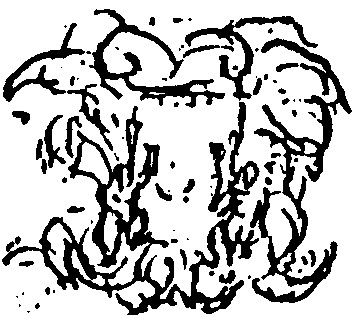
We are getting on slowly in the furnishing department. I reproached Robert, you know, with a drawer-plague .. he was so fond of raining down drawers upon us .. but when we came to compare my sofa-plague, & see which evil grew fastest, .. it was found the other day that we had eight sofas & only six pairs of drawers. So now I have nothing to say. It’s a comfort to have sofas everywhere—three spring ones in the drawingroom, a little spring one in the bookroom—a large spring one in my bedroom .. & others of an ordinary fashion sprinkled here & there. Three spring arm-chairs to boot. So if you [sit] down anywhere, you drop into soft air. Not a curtain up yet though, nor a bell rope—and the bed in my room is borrowed– We have an iron-bedstead .. besides Wilson’s: but Robert wants a ducal bed for my room, all gilding & carving—we shall see. Not a tree or a flower on the terrace because he wants to put off that till the last—but I teaze him capitally about them– Summer going by, & no vines planted. I want festoons of vines & roses everywhere. We have been extravagant enough to give five pounds for a glass—above the drawingroom fire place—not very large, but with the most beautiful carved gilt frame I ever saw in my life. [3] Illus. Two cupids hold lights at the lower part. It belonged to the French Chargé d’affaires [4] .. from whom we have bought many other things. For our dining room chairs .. pure antique Illus. .. Gothic, rather, black, carved wood, we gave 3s–8d each. [ART] All this being done, we have it in our heads to make a little tour, & see the fair of Sinigaglia—but I told you that, when I wrote to Arabel. On our return, or rather on our setting off, we are to part from poor Annunciata—we must. We should have done it before, but, poor thing, she wanted to stay, & we had not the hearts to send her away, notwithstanding the obvious fact that she was unfit for the necessary work, & that if Wilson did not sweep the rooms herself they wd remain unswept. We can have a manservant at the same expense, to do everything effectually, inclusive of cooking in the house– Wilson will make my bed & her own, & empty our basins—& the rest belongs to his department entirely. So it is settled—Annunciata has asked for another month, & we have given it– Then, we think of our tour—& for our return we shall engage an Italian manservant– It’s the custom here in all provident families—& Wilson is of opinion that our comfort & cleanliness will be much improved by it. Then, by that time, poor Annunciata will have another grandchild to take care of at home .. a third .. her sons in law pay her so much a month for the charge of them .. & it’s profit & pleasure together: also she will have married her third daughter & that expense will be over. Altogether she will miss us less, so we wait. These are large rooms which of course require activity & energy, & she is remarkable for neither. Besides it will be pleasant to have our dinners cooked at home, .. and Wilson may give instructions in the mysteries of cherry tarts & puddings, without needing to make them herself. She has made us an admirable cherry tart lately, (call it pie!) the Italians having no imagination for such things, though nature does her part well, .. the cherries are nearly as large as apples. While I write there’s a Punch talking under the windows, just as he wd talk in Wimpole Street. You know, or may not know, Punch is Neapolitan by extraction—but I forget that, & unawares fancy myself in London. [5] Today is the great Florentine day of St John [6] —only no fire works this year, on account of the war. Very sensibly the people have sent their money to the army in Lombardy. Austria goes out slowly, but never will recover her position in Italy, let Mr Fowkes [7] fight ever so. This is the opinion of persons of various politics. In the meanwhile I groan in the spirit for France. The republic seems inextricably involved with the communists,—and no better issue appears than a return to the kingship .. whether the count of Paris or Prince Napoleon, [8] or the Duc de Bordeaux, who shall say? The Duc de Bordeaux’s sister the princess of Parma [9] is in a villa close to Florence, received as a fugitive & guest of our Grand Duke– A hard case, indeed! She came alone, with two English servants[,] a man & his wife, on the point of her confinement, & just waits till the event is over. The grand duke goes to see her twice a day, but otherwise she receives no visitors whatever. Afterwards she talks of England. By the way, how shamefully you behaved to the French actors– [10] I am ashamed. It is a thousand times worse than simple retaliation .. because when the French workmen expelled the English, it was in a moment of crisis, emotion, starvation! For cultivated citizens of London to act so! for Mr Sergeant Talfourd to present that petition is almost incredible! [11] and I am very vexed, & Robert the same. Let me thank you, dearest Henrietta, for your kind words to Nelly Bordman. You see I heard of them! both my sisters were mentioned. Thank you! It is a kindness to me. By the time you read this she will probably be Mr Jago’s wife, since she talks of being married on the 30th of this month. I cant help wishing low to myself that he was twenty years younger—but the difference will not prevent her being very happy, I believe. She has the most absolute trust with the best reasons for trusting– Never was a better man & truer Christian: and having lived together these eight years & more, there are none of the risks of a common marriage. There must be, for the rest, something paternal in his affection for her, and something filial in her’s for him .. but marriages are diversely happy and affection is affection, after all. Louisa Ley has a little girl, & nearly died–
<…> [12]
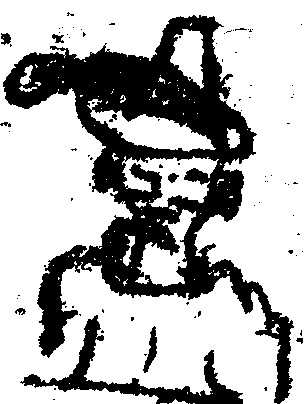
I feel quite uncomfortable at my apparent unkindness to her, .. about not calling—but while she was within walking distance I was not able to walk, you know, .. & just when she removed to the other end of Florence, we gave up the carriage through economy– I cant walk to the other end of Florence, let me try ever so, & be ever so strong—it must be a mile and a half or more– Then, till quite the evening, nobody can stir out now, on foot or in carriage—not women, at least. Thermometer in the shade above eighty, fair afternoons. In our rooms we keep it at seventy one or two, by shutting the green blinds, the windows, & the shutters .. all three quite close. It was long before I could be persuaded to shut the windows as in the winter—it seemed too hard to shut out the sweet external air. But Robert has ground it into my mind at last, that it’s the only thing to do—and experience makes the thing evident. In the mornings & the evenings, & all the night through, we take our revenge by opening everything wide– At about eight in the evening, we go out to walk, & loiter about & sit in the Loggia until past nine. The sunsets on the bridges are divine– Tell me what you think of my poem in Blackwood, if Blackwood puts it in– [13] It is longer than the Prometheus. I wrote to Bummy the other day—directing my letter to Tunbridge Wells, merely– I suppose she will get it notwithstanding. What a rambling scrambling letter this is, to be sure. We like Count Cottrell much better—he is amiable & affectionate, I believe, & makes his wife happy. Think of his arriving here with her the other night, just as we were going to supper, in a hat and feather so! Illus. I said “What, Count Cottrell! You, in a republican hat!” (Because the exaltés [14] of the Italian party are apt to wear these hats in the streets–) “No,” answered his wife .. “a neopolitan hat—not republican.” His politics, I imagine, are anything but over-liberal, but the hat must have been considered becoming– Mr Ley hates Florence constantly, & will not be bribed into staying here, even by the advantage to Louisa’s health which is already manifesting itself. Now, whenever you write, you will mention the Hedleys of course, & everybody else who interests me. Oh, that I had a letter! Henrietta—write the browning very distinctly, I entreat you—for these people at the post office have to spell every word they read, and are by no means happy in their guesses. Mr Kenyon talks of coming to Florence this year– Why wont George give us his vacation? It would be kind, & it wd make me very happy. Also, it is feasible & easy– Surely he might do it. He wd be received into four open arms. Robert has always kept saying that the “hardest stroke of all” in the refusal of sympathy & affectionateness, came from George– He was so prepared to love George—he felt towards him already as a friend!– Ah—I [15] might speak more strongly:– But now, there’s an end of a year & nine months; & by the autumn, it will be two years since my marriage– I cant make out how those who ever loved me a little, though ever so little, can bear to stand off from me still. The happiest of all wives, I am!– Why is it to be grudged, that the happiness should not stop there? George might “go on the continent” & specify nothing more .. & then, slip down the railroad to Marseilles. How glad I should be! and here’s room for him; & bread & salt, and Florence is worth a visit, if we are not– Often I think of you, Henrietta, & of your imagination, that I wd be afraid of my husband. Afraid!– Oh, I should not like being ‘afraid’ at all—it is better to be pert & impertinent, as I am sometimes. I think aloud to him—& he, to me. I am sure that we have not an “aside” once a week, from one another. And still he goes on spoiling & spoiling me—there’s no end of it—indeed it’s rather worse than ever, I think conscientiously. Tell me of dearest Trippy & give her my truest love & a kiss. I shall write to her one of these days—though I always consider that my letter to you takes her in– Tell me how she is—how she looks– Mention Papa particularly I beseech you– Nelly Bordman said that she saw him & that he looked well & spoke kindly. He must have thought of me lately—and I was touched that he should have paid that last attention to another [16] which could not avoid bringing me to mind. Annie’s conversion to Catholicism on the spur of Jane’s insolence, of which Nelly tells me also, is very characteristic. A melancholy close! But I shall not write of these things. God has the key of them in His own hands. How are the Cooks? Give my love to Susan & Surtees too. Miss Bayley complains in a letter, tell my beloved Arabel, that “she wont let her be intimate.” Naughty, dear Arabel!– Robert always says “dear Arabel” whenever he speaks of her, so I cant imagine why he should write “Arabella”. The weather is not oppressive while I keep still & in the house– Seventy & eighty degrees dont mean here the same thing as in England, the air being so light & elastic. I am very well & looking well, .. & find myself running unawares– Mr Tulk was expected this last week with his two sisters. Miss Tulk had another illness at Ferrara, after the severe one at Padua,—but he was better– If you have not already heard I shall astonish you a little by the announcement of old Mr Surtees’s approaching marriage. [17] Mrs Loftus told us that she was a “Juno-like woman”, & he, very devoted. It may be a scandal, you know: but his daughter certainly sent an express from Pisa to look after her father .. and lo, he had gone off to Sienna to wait upon the lady. He seemed to me when I saw him (if I saw him at the table d’hôte, as Robert said I did) that he was in an advanced wane of the faculties. Do you wear mantillas in civilized lands, or what? great bonnets, or small? Tell me if there’s anything extraordinary in the way of shoe-ties. Write, I do entreat you. Love to Henry & them all– Is Lizzie better? How is Minny? My love to her. Does Crow get on well? Robert puts affectionate thoughts with those of
your ever attached
Ba–
Address, on integral page: Angleterre, viâ France. / To the care of Miss Tripsack, / (Miss Barrett,) / 12 Upper Gloucester St. / Dorset Square, New Rd / London.
Publication: Huxley, pp. 85–88 (in part).
Manuscript: British Library.
1. Year provided by postmark.
2. Four lines obliterated after receipt, probably by Henrietta.
3. This mirror formed lot 1312 of Browning Collections (see Reconstruction, H401). It was returned to Casa Guidi after being acquired by Eton College in 1995 (see illustration facing p. 112).
4. Sig. Barone Enrico de Poilly, as identified in the Almanacco Toscano for 1846–47. EBB spells his name “Poillet” in letter 2739.
5. The exact origins of the puppet Punch are unknown, but the name is generally believed to derive from the Italian Pulcinella, a character in the commedia dell’arte of the 17th century. “Pulcinella was not the oldest or the most important of the comic servants, but he did acquire a considerable local prominence in Naples” (George Speaight, Punch & Judy, 1970, p. 12).
6. The feast of St. John the Baptist was traditionally celebrated with fireworks on the Ponte alla Carraia; see letter 2681, note 5.
8. i.e., Louis Napoleon, later Napoleon III; see letter 919, note 6.
9. Louise Marie de Bourbon (1819–64), sister of “Henri Cinq,” had married in 1845 Ferdinand Charles de Bourbon (1823–54), Duke of Parma (1849–54), son of Charles Louis, the current Duke and former Duke of Lucca. Princess Louise gave birth to a son, Robert (1848–1907), on 9 July in Florence.
10. When Dumas’s Theatre Historique production of The Count of Monte Cristo opened at Drury Lane Theatre in London on 12 June 1848, it was stopped by a mob shouting and whistling. A report in The Times of 13 June 1848 noted: “It has generally been the pride of Englishmen that they are free from those illiberal national prejudices by which most other countries are distinguished. It has been their boast, that although English artists have been maltreated by foreigners, the English public has made no reprisals. … Let us hope … that the French gentlemen who were present at the scene last night did not take the hootings of a few interested persons for the expression of the English people” (p. 5).
11. According to The Times of 16 June 1848, Talfourd “presented a petition from persons connected with the Haymarket Theatre, complaining that a number of the metropolitan theatres were appropriated to foreign performances, and another petition of a similar nature from persons connected with theatrical business generally” (p. 3).
12. About four lines obliterated after receipt, probably by Henrietta.
13. i.e., “A Meditation in Tuscany”; see letter 2734, note 3.
14. “Fanatics.”
15. Underscored twice.
16. Presumably Hugh Stuart Boyd who had died the previous month.
17. Robert Surtees (1782–1857) of Redworth and his first wife Elizabeth Cookson (d. 1847) had visited the Brownings in Pisa. He married secondly, on 10 July 1850, Anne Alston (d. 1858), daughter of Alexander Hepburn Mercer and widow of Justinian Alston.
___________________